Key Features
- ["Genuine DENSO aftermarket quality standard\nVerified compatibility support from Santacruz technical team"]


Denso Engine Oil
Engine oil serves as lubricant to prevent the metal- particle/ carbon contamination caused by frictions and combustion and cleans up the inside of the engine, keeping the movement smooth.
Santacruz Service Center is an authorized DENSO aftermarket partner, supplying genuine products with specialist compatibility support.
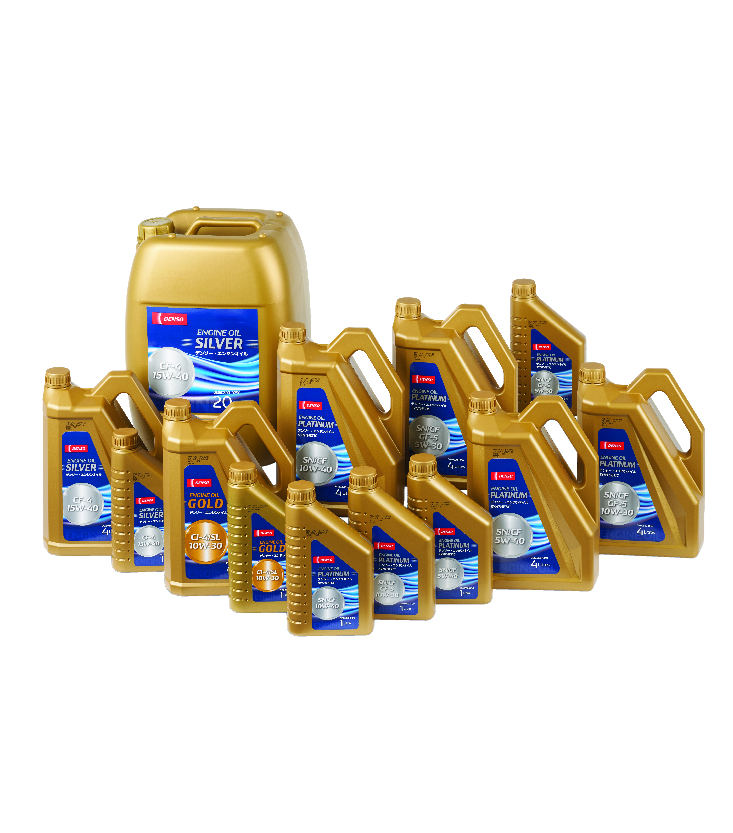
Engine oil serves as lubricant to prevent the metal- particle/ carbon contamination caused by frictions and combustion and cleans up the inside of the engine, keeping the movement smooth.
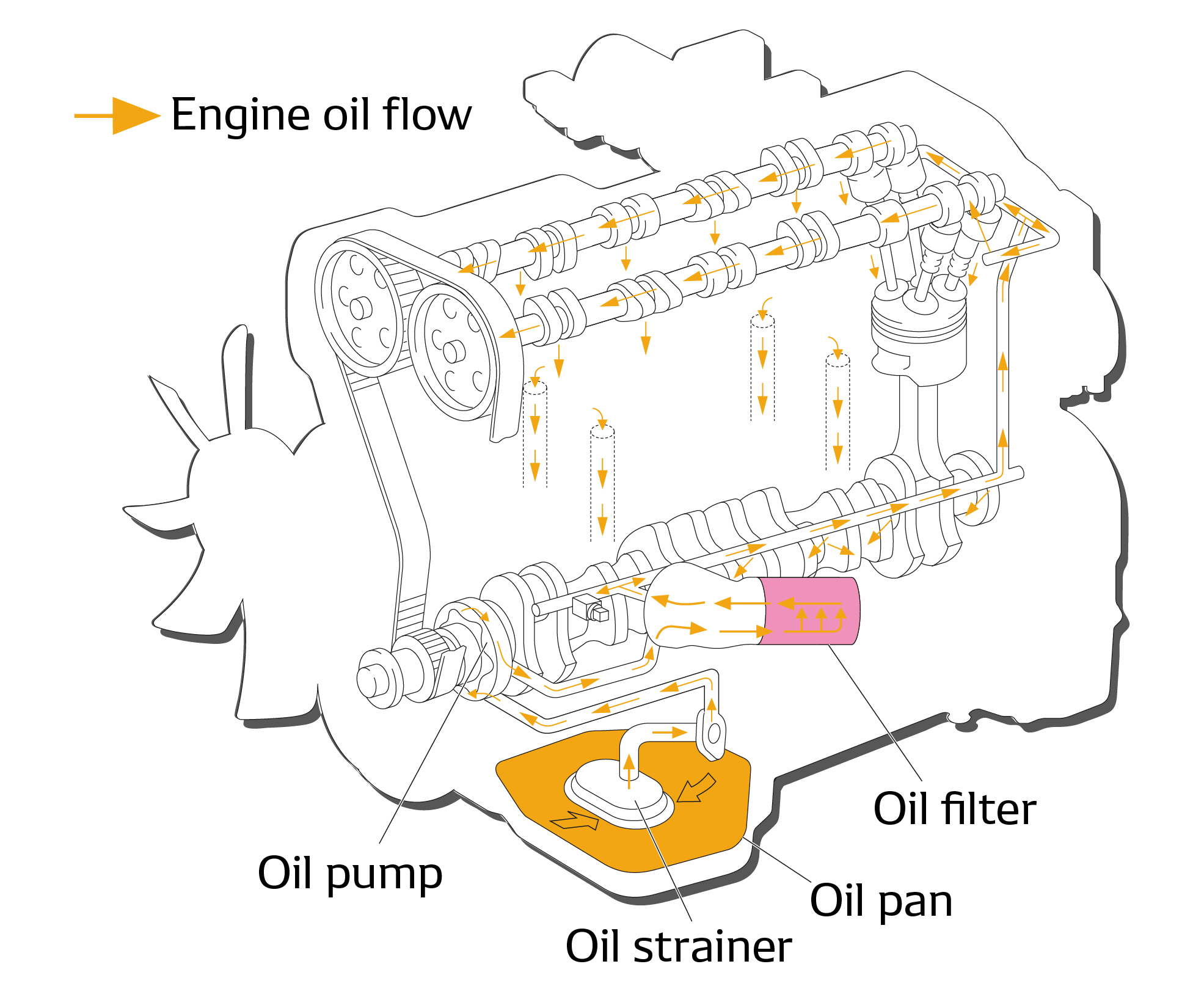
1. Lubrication – minimize engine wear
2. Cooling – conduct frictional heat
3. Protection – protect parts from corrosion
4. Flushing and cleaning – remove and dissolve impurities and deposits
|
Base Oil (60-90%) |
Additive (10% - 40%) |
|
Mineral (SN) Semi Synthetic* HC-Synthetic (HC)** Synthetic (PAO/Ester)
* undefined mix of base oils – no legal definition in place ** No common definition – considered in some countries as synthetic but in some as mineral |
Detergent/ Dispersant Antioxidant EP/AW Friction Modifier PPD VI-Improver Anti Foam Corrosion Protection |
Engine oil is made up of 60-90% base oil + 10% - 40% additives
Based on feedstock Crude Oil as a “Natural Product”, this substance is not of uniform quality but consists of several thousands of hydrocarbon compounds.
Differ in quality and composition caused by their provenance.
Have to be refined before usage as a lubricant.
Lubricant base oils are the result of a long and complex distillation and refining processes.
Additives have to strengthen their good properties and have to balance their disadvantages.
The Base Oil Groups are defined by API and ATIEL
Often a combination of different Base Oil Types is used within one formulation
|
API - Group |
Classification |
Saturate Level |
Sulphur Content |
Viscosity Index |
Costs |
|
Group I |
Mineral Oil (Solvent Raffinate) |
< 90% |
> 0.03% |
80 < VI < 120 typically < 100 |
low |
|
Group II |
Mineral Oil (Hydrated Solvent Raffinate) |
> 90% |
< 0.03% |
80 < VI < 120 typically < 100 |
low |
|
Group III |
Mineral Oil (Hydrocrack) |
> 90% |
< 0.03% |
VI > 120 typically 120 – 135 |
medium |
|
Group IV |
Synthetic (PAO) |
--- |
0 |
VI > 120 typically 120 – 150 |
high |
|
Group V |
Synthetic (mainly Ester) |
--- |
0 |
--- typically 120 – 160 |
very high |
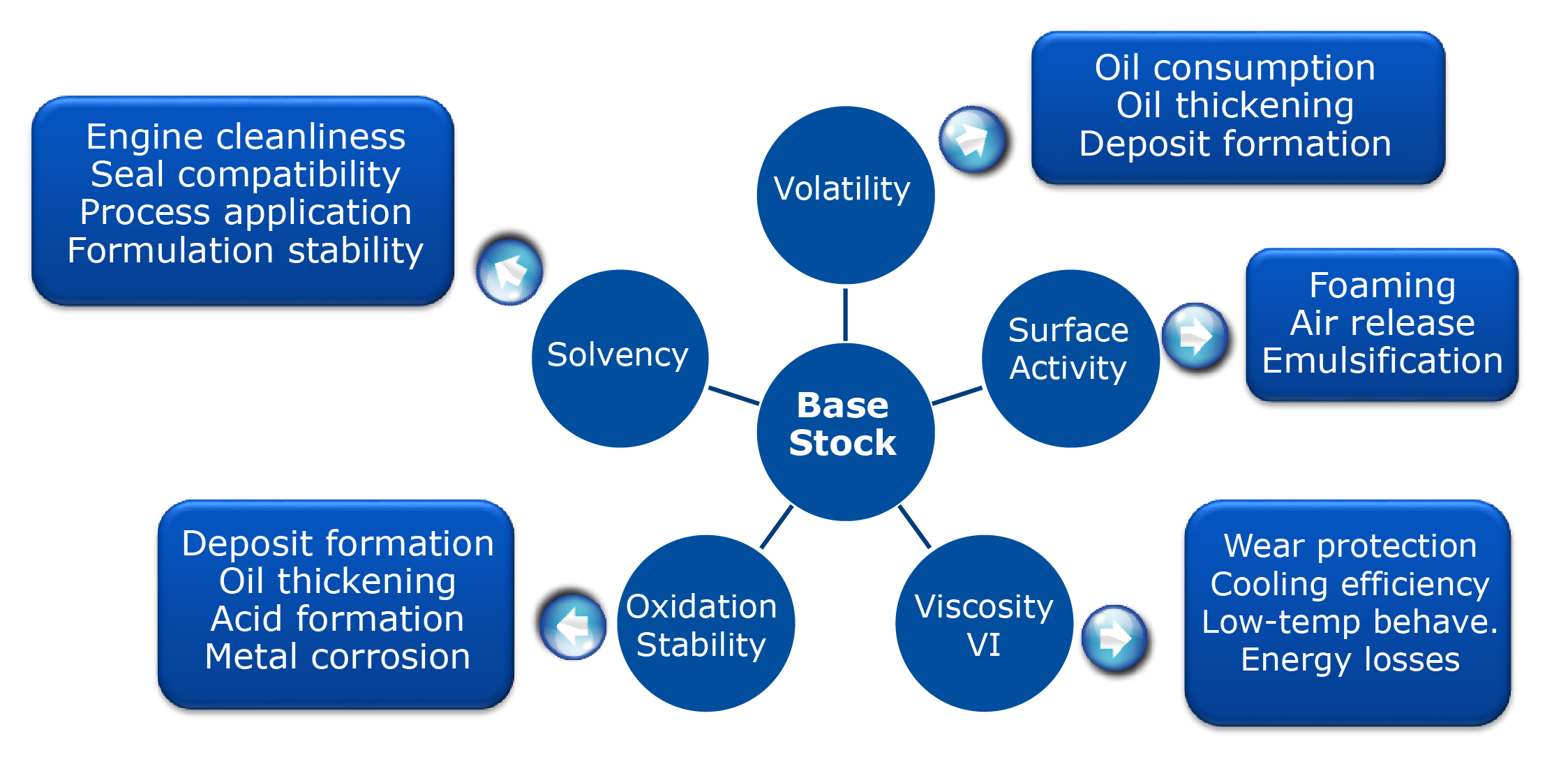
Base oil affects lubricants in different ways, therefore the need for additives
Mineral … Semi-synthetic … Synthetic … Fully Synthetic…
Definition, perception and use of the above base oil descriptions is widely different in different countries of the world.
Often base oil description is understood as a quality indicator, but actually it is not. It is always the base oil composition together with the additive technology that defines the performance.
Only if during the production process the molecules undergo a “real” SYNTHESIS process, then the resulting fluid may also be called synthetic
API-Group IV and V -> PAO, PIB, Esters, PG etc.
Everything else, where the majority of the molecules in the fluid are still directly originating from the original crude oil are in this sense mineral base oils
In Summary,
(1) Market misconceptions of base oil as quality (correct: quality is based on combination of base oil and additives)
(2) Quality is defined by performance profile and not base oils
(3) Clarifications of market understanding on “mineral”, “semi-synthetic”, “fully synthetic”
|
API -Group |
Group I |
Group II |
Group III |
Group IV |
Group V |
|
Group I |
Mineral |
Mineral |
Mineral* Semi-synthetic* |
Semi-synthetic |
Semi-synthetic |
|
Group II |
Mineral |
Mineral |
Mineral* Semi-synthetic* |
Semi-synthetic |
Semi-synthetic |
|
Group III |
Mineral* Semi-synthetic* |
Mineral* Semi-synthetic* |
Mineral* Semi-synthetic* Synthetic* |
Semi-synthetic* Synthetic* |
Semi-synthetic* Synthetic* |
|
Group IV |
Semi-synthetic* |
Semi-synthetic |
Semi-synthetic* Synthetic* |
Synthetic |
Synthetic |
|
Group V |
Semi-synthetic |
Semi-synthetic |
Semi-synthetic* Synthetic* |
Synthetic |
Synthetic |
Remark: Often a combination of different Base Oil Types is used within one formulation
* The classification/ naming of the base oil mixture can vary on a wide range depending on the region or local regulations (if any). For example, for yellow marked combinations, there is no official regulation in place (in Asia).
Purpose of Additives
Even by using more and more high quality Base Oils,
Additives are needed to fulfil the requirements of modern lubricants.
What Additives do:
Improvement of desired lubricant properties
Suppression of unwanted lubricant properties
Adding new properties to lubricant
Typical Additive treat rates range from a few parts per million (ppm) up to 30% and more.
Some additives do interact with each other.
synergistic effect,
insoluble deposit formation
Antagonistic effect/reduction of performance.
*Careful selection of Additives is therefore required.
Additives can, in principal, be divided into three types:
Type A: Surface Protection Additives
Type B: Lubricant Enhancement Additives
Type C: Lubricant Protection Additives
TYPE A: Surface Protection Additives
|
Name |
Code |
Desired Effect |
|
Detergent/ Dispersant |
DD |
Keep surfaces free of deposits Keep insoluble particles dispersed |
|
Extreme Pressure Additive Anti-wear Additive |
EP/AW |
Reduce friction and wear and prevent scoring |
|
Friction Modifier |
FM |
Adjust friction level (increase/decrease) |
|
Corrosion/Rust Inhibitor |
CI |
Prevent corrosion of metal parts |
TYPE B: Lubricant Enhancement Additives
|
Name |
Code |
Desired Effect |
|
VI-Improver |
VII |
Reduce the rate of viscosity change with temperature |
|
Pourpoint Depressant |
PPD |
Enable Lubricant to flow at low temperatures |
|
Seal Swell Agent |
-- |
Swell elastomeric seals |
|
Dye |
-- |
Lubricant identification |
TYPE C: Lubricant Protection Additives
|
Name |
Code |
Desired Effect |
|
Antioxidant |
AO |
Increase Oxidation stability |
|
Antifoam Agent |
AF |
Prevent Foaming |
In summary,
To meet the requirements of modern high tech lubricants, the usage of a plenitude of special Additives is needed.
Additives have to improve desired properties and prevent from unwanted effects of the lubricant.
Most of the additives are surface active and therefore compete on the friction partner surface. Some additives can interact with each other (sometimes synergistic/negative effect).
Careful selection of Additives is therefore required, which means to find the best compromise.
|
OEM-Specifications = Basic Specifications + Tighter Limits + Inhouse-Test + Field Trial |
Basic Specifications •Chemical/Physical Properties •Technical Requirements |
|
Example:
|
Example:
|
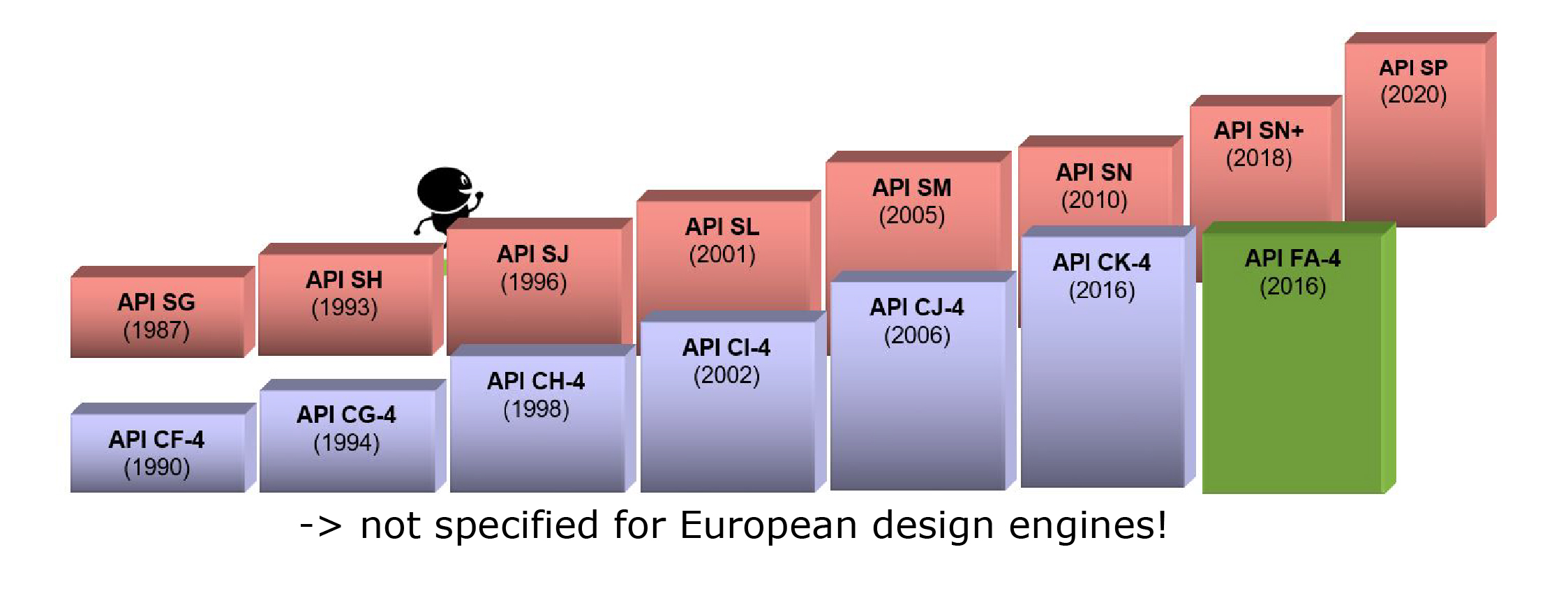
American Petroleum Institute differentiates between operating mode of engines and performance levels:
S (Spark ignition): Gasoline Engines
C (Compression ignition): Diesel Engines (HD)
Second letter defines performance level
Number for stroke mode -2/-4
Our support team helps you choose the right product or service for your vehicle requirements.